Archenland’s succession law
The Horse and His BoyArchenland’s succession law determines the crown by birth order and places the king himself under the law that gives him authority. Its consequence becomes personal when the missing Cor returns: although he would rather not inherit and Corin is happy to remain a prince, Cor is the elder twin by twenty minutes and therefore King Lune’s heir. The episode presents succession not as a father’s gift to whichever son he prefers, but as a binding public rule whose inheritance carries obligations as well as rank.
The Rule and Its Heir
At the feast in Anvard, King Lune tells Cor that the next day he will show him the castle’s strengths and weaknesses, because Cor will be responsible for guarding it when the king is gone. Cor objects that Corin will be king then. Lune corrects him: Cor is the heir, and the crown comes to him. The practical lesson in the castle’s defenses thus follows directly from the succession: the newly recognized son is not merely welcomed into the family but prepared for the office he is legally to assume.
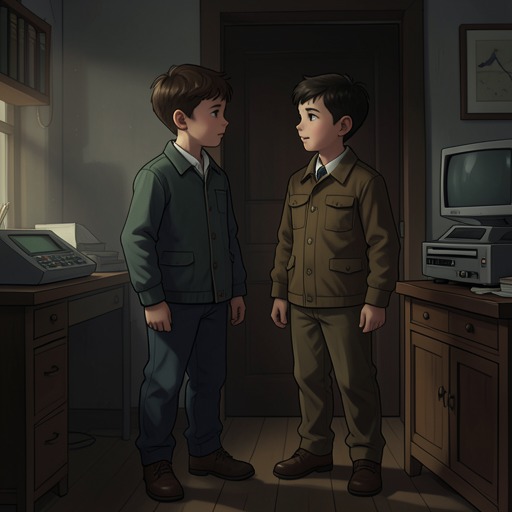
Cor does not accept the news as a reward. He says he does not want the crown and begins to protest that Corin should have it instead. When he points out that he and Corin are twins and must be the same age, Lune explains that one was born first: Cor is older by a full twenty minutes. He adds, jokingly, that Cor is the better brother too, while teasing Corin. The exact interval is small, but the law makes it decisive; the twins’ shared birth does not make their claims equal.
Law Above Preference
Cor asks whether Lune could simply choose whichever son he wants as the next king. Lune says he cannot. The king is under the law, because the law is what makes him king; he has no more power to step away from his crown than a sentry has to leave his post. Succession therefore limits royal discretion at the same time as it authorizes royal office. Even the reigning king cannot alter the rule to suit family affection, personal judgment, or the wishes of either son.
That constraint gives Cor’s reluctance a different meaning from a refusal that could settle the matter. He apologizes to Corin, saying he never imagined that his return would deprive his brother of a kingdom. But the law does not turn on what either twin wants: Corin cannot make himself heir by preference, and Cor cannot give the inheritance away by choice. Corin, for his part, celebrates that he will not have to be king and can remain a prince. Their opposed reactions expose the distinction between holding royal status and bearing the crown’s prescribed responsibility.
Kingship as Responsibility
Lune explains the burden attached to the inheritance by describing a king’s duties in hardship and war. A king must be first in a desperate attack and last in a desperate retreat. In years of hunger, he must wear finer clothes and maintain a louder show of cheer while eating less. The crown is therefore not presented only as privilege or family inheritance; the law appoints Cor to a role defined by responsibility to the people and by leadership under pressure.
The succession also connects Cor’s individual identity to Archenland’s recent danger. Rabadash had urged the conquest of Anvard, arguing that its capture would give Calormen a hold on Narnia. After the attack, King Lune identifies Rabadash’s conduct as treachery: he had attacked the castle in peacetime without first sending a challenge. Lune later offers to free him unharmed under conditions, invoking the law of nations and prudent policy. These contrasts place Cor’s lawful inheritance alongside a wider distinction between rule bound by law and the attempted seizure of power by force.
Recognition and Narrative Significance
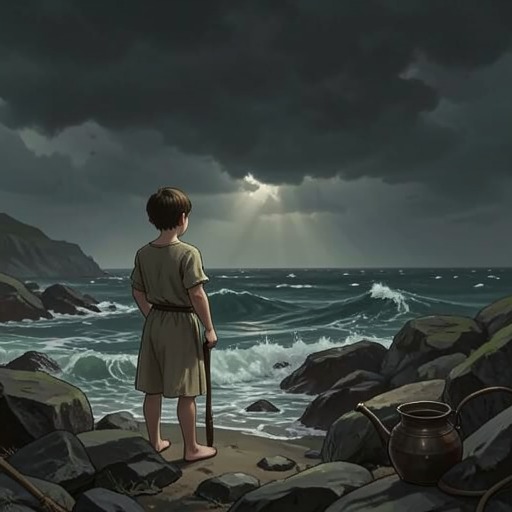
The succession is disclosed after Cor’s return has resolved the mystery of his identity. At Anvard, Corin recognizes Shasta as his long-lost twin and brings him to their father; Lune acknowledges him as Cor. The revelation changes the brothers’ futures: the boy who had grown up outside the royal family becomes heir, while the prince who expected to inherit remains a prince. Their reunion does not erase the legal consequence of their birth order; it makes that consequence newly visible to both of them.
By making Lune answer Cor’s objection with the image of a sentry at his post, the story frames the crown as an office governed by rules rather than a possession that can be handed around at will. The law decides who inherits, but Lune’s account of kingship explains what that inheritance demands. Cor’s accession is thus established through two linked principles: the order of birth fixes the heir, and the duties of kingship define what the heir must accept.